
This blog post represents the author’s views and should not be interpreted as professional/medical advice or endorsed by NEDA.
Neuroplasticity in Behavioural Based Eating Disorder Recovery
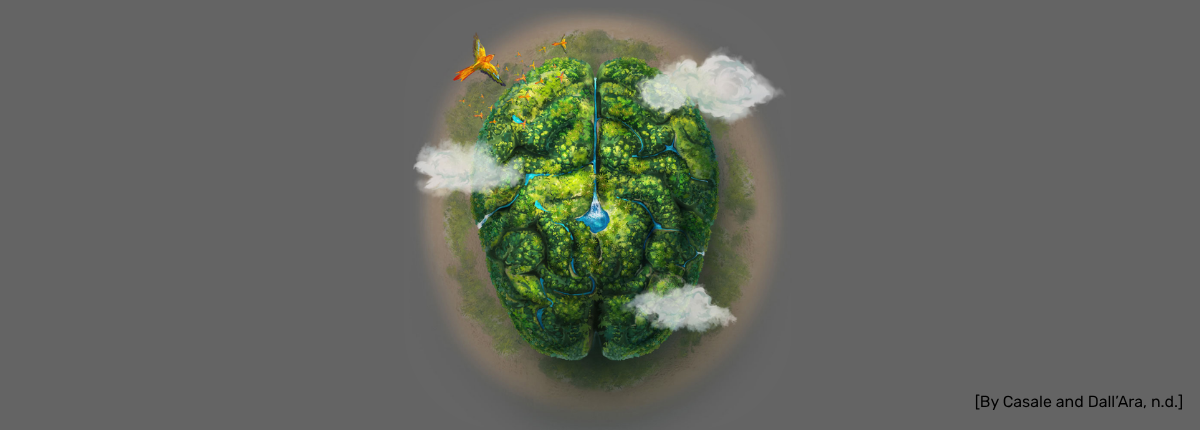
Recovery is a concept that my eating disorder often used to mock – convincing me that obtaining wellness and serenity was insurmountable, and even laughable, because I had been living one way for so long. Yet, our brains are incredibly adaptable. With each risk food I eat in fear, each direction I take from my practitioners (sometimes defiantly), and each reminder that the number on a scale doesn’t define me, I have begun to reroute my neural pathways, even if it doesn’t feel as such. I am slowly but surely learning that choosing recovery has allowed me to perceive myself as the person my eating disorder told me I could never be without it: important, resilient and worthy.
Before I Took The First Steps of Recovery
When I was growing up, I felt that my skin was too tight for me. I felt that I took up more space than I was allowed to, as if I were filling a room that was never mine to fill. So throughout the years, I learned of ways to make myself smaller, both figuratively and literally. There was a self-loathing budding in me that manifested in self-destructive behaviours, and for me, the most familiar of these vices was my eating disorder.
Choosing What to Share
As I sit at my laptop, setting an alarm to remember to eat in 2 hours, I debate what part of my eating disorder history to share with you.
I consider explaining the most dehumanizing moments, the ones that will elicit the most shock, the ones that will leave you feeling gutted. I think of writing about the places I avoided, the foods I didn’t try, and the memories I missed out on making all because of my eating disorder.
But I stop myself and realize: telling you about the most heartaching days of my bulimia or my anorexia won’t do anything because I’m sure it’s nothing you haven’t heard before. The impact of explaining the hospital visits or body dysmorphia in excruciating detail doesn’t hold a candle to the weight of explaining what it is like to choose recovery every single day. So, this article will be void of those anecdotes. What I would like to share with you is what it feels like to essentially reroute your neural pathways. Because to wake up, everyday, and choose between recovery or my eating disorder, is hands down the hardest thing I have ever had to do.

Two Paths, One Choice: Standing at the Edge of the Forest
I open my eyes each morning, and I feel as though I am standing at the edge of a forest. Facing two very different paths, I contemplate which one to take, the left one or the right one. My toes curl in my shoes, almost gripping onto the earth’s flesh, unsure of which way I should go.
The path on the left seems short and straight forward. I started taking it at 6 years old. It is so easy to choose this path because I could do it with my eyes closed, so of course it makes sense to keep taking it. The trail on the ground has clearly been tread, there are no tree branches to dodge and no rocks to accidentally lose my footing over. I never see anybody else walk this trail and it’s pretty isolated, but I try not to let that bother me. I’m used to walking this route. I am tempted by its familiarity. So, I keep taking it.
The second path – the one on the right – is seemingly longer. Winding. It looks daunting. I almost feel defeated before I even pursue it. There are bushes to scratch you, moss to slip on, and tree limbs woven together, obstructing the way. Most of the time, I can’t even really see where I’m going because it’s so dark, so why would I ever want to take this route? It’s not linear. It’s unpredictable, and when I stand at the mouth of it, I am overcome with fear because I can barely see my destination.
So here I stand, each morning, at the edge of this forest, contemplating whether or not I take the path on the left or the path on the right. Sometimes it almost feels as if my feet are sinking into my footprints because I’ve stood here so many times before.
Yet, the thing is, I know I should take the path on the right. I know I have to take the path on the right, even if at first it seems like the harder option – particularly then.
Cognitive Dissonance: The Back-and-Forth of Early Recovery
This is what it feels like to choose recovery. At least, that’s how it felt to me in the beginning – totally foreign. Terrifying. Directionless.
I didn’t know where to begin.
I didn’t really even know what I wanted.
I was in this place where I both wanted recovery, and didn’t want recovery at the same time.
This would often look like walking back and forth between the living room and the kitchen, sometimes for hours at a time, just opening the fridge door and then closing it. Opening it and closing it.
Opening it and closing it.
Opening it and closing it.
Both my voice and the disordered voice were screaming over each other, trying to get the last word in.
It’s an extremely draining and debilitating place to be in. I feel that this cognitive dissonance is an all too common experience for many people suffering from an eating disorder – or any addiction, for that matter – and deciding whether or not to start walking the path to recovery.
I needed to do something though, because I wasn’t living, I was existing. For a very long time, I was one foot in and one foot out.

Guidance Along the Path: Finding Support and a Map
So once I admitted defeat, and tried another way of living – recovery – I met people that told me to just jump in with both feet and then they would guide me from there.
And they did.
They won’t always hold my hand and tell me each and every step of the way, but they have given me a map. They’ve equipped me with the survival skills and directions to avoid the branches and jump over the roots. Reaching out to my support system when I feel like I might relapse is the first step I go back to. Other avenues on my map include mindfulness, avoiding mirrors if necessary, and limiting my social media use.
From them, I’ve learned which spots have the slipperiest moss, and where the poison ivy typically lays, like in comparing where I’m at in recovery versus others. They have also shared with me where to find the best smelling flowers and which ones have the brightest colours, reminding me to appreciate them along the way. They’ve even told me where that one special tree is. The one with its trunk carved in the initials of others, acting as a guestbook, for those that walk this same path every day.
The Path to Recovery Gets Easier the More I Walk It.
The more I take this new path, the easier it has become. I’ve been taking it so often now, that most of the time, I remember where I am going. Now I avoid the roots on my own, and I’ve actually cut down a lot of those branches that were once in my way. I usually know which turns to make so that I can get to where the sun shines.
Sure, at times I’ll lose my way. Sometimes I get lost for days or weeks at a time, slipping back into disordered thoughts or behaviours, but all I need to do is refer back to my map.
There are even times where I’ve forgotten how to read the map, and have had to ask for a direction or two from the people that gave it to me in the first place. And that’s okay.
I’m starting to take this new path so often that it’s pretty well worn in. I can often see some of my footprints from the days before.
And that old path, the one on the left, is actually becoming harder to take. In fact, it’s mostly overgrown. This new path leads to a much more beautiful destination, anyway.
Some days it feels easy to choose the path to recovery and tell the ever present echoes of my eating disorder to kindly take its foot off my neck. There are also days where I struggle to pull myself out from under its deceitful boot. There are times I have to sit down and give myself a pep talk about how those weight loss remedies *insert current celebrity ambassador here* is shamelessly promoting won’t make me any thinner – nor do I need to be.

A Message to Those on the Path
In a world that profits off self-doubt, liking yourself is a rebellious act. So I try my best to be a rebel, and I encourage you to do the same.
I write this for those who are currently walking, or are considering taking the path to recovery. Keep going. Our eating disorders will forever promise us the world and then strip us of our ourselves. So, do the uncomfortable thing and recover, because if you aren’t uncomfortable, you aren’t growing. And you deserve to grow. You deserve it so much.
I write this to thank those who led me to this path and showed me how to clear it. To my recovery team and other professionals, you saw the light in me when I couldn’t see it for myself. Each one of you has helped me to begin building a life without this cunning and captivating illness. You have helped me to start meeting myself all over again. Thank you for constantly reminding me that there is another path to take, and thank you for helping me to walk it, over and over again.
And finally, I write this to remind that little girl in me that felt so unworthy and unsure of herself, and to her I want to say:
My dear, you are not object of, you are subject to.
There are about 100 things about you that are far more interesting than the width of your waist or the size of your clothes.
You are not here just to be observed or to be desired.
You are not here to just exist.
You are here to live.
You are here to take up space.
So take up as much space as you can, even if it feels radical.
Especially then.
Resources
Think you may have an eating disorder? Take our confidential screening test
Looking for eating disorders treatment? Find providers in your area or online.
Are finances preventing you from seeking support? Learn about free and low cost support options
Now pursuing a Bachelor of Social Work, Emma is in recovery from an eating disorder and shares her experiences of healing, whenever she can.