
NEDA’s Skill-Building Webinars
Watch a recording of a previous webinar or sign up for an upcoming webinar. Hosted by eating disorder experts, these presentations provide participants with practical skills to support recovery wherever you are on your healing journey.

Upcoming Webinars
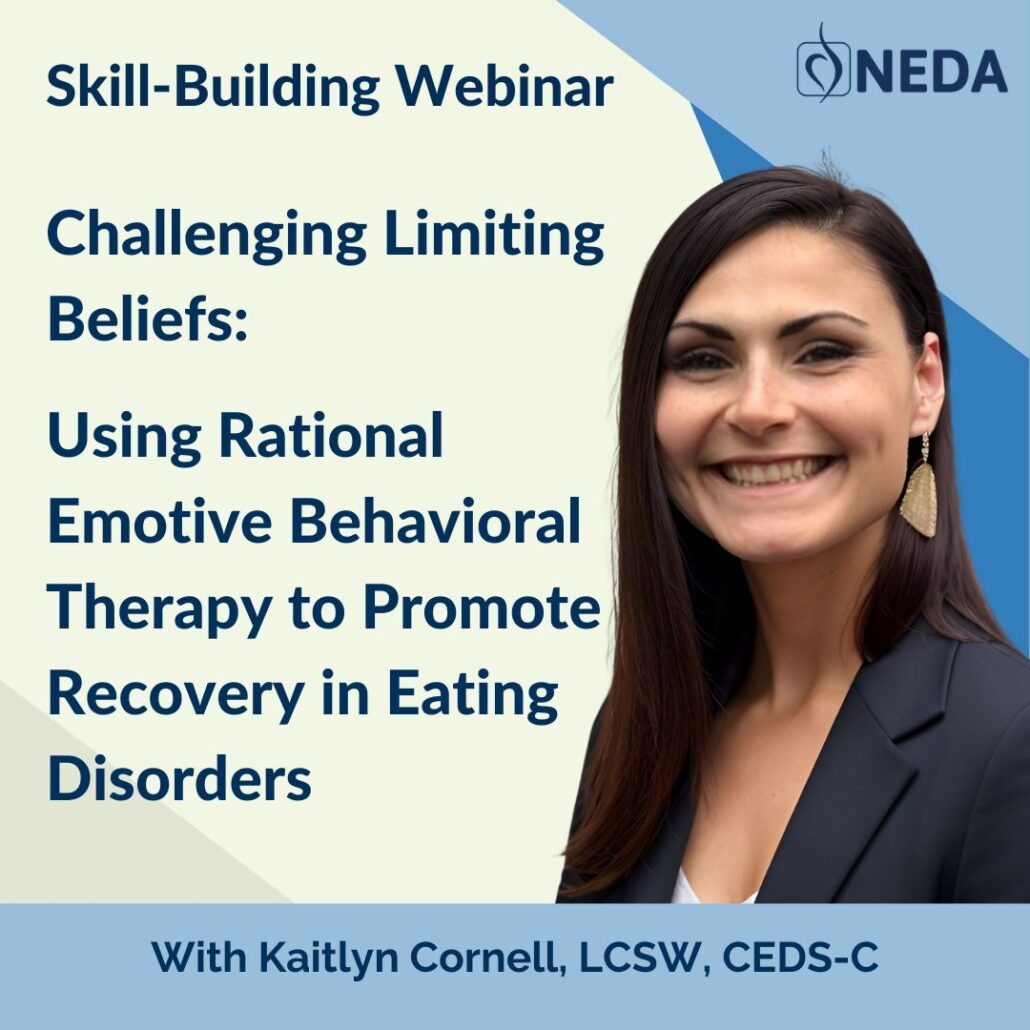
In this webinar, Kaitlyn Cornell, LCSW, CEDS-C, explores how Rational Emotive Behavioral Therapy (REBT) techniques can help reframe deeply held beliefs that fuel perfectionism, negative self-perception, and unhelpful eating behaviors.
Participants will learn how to:
- Identify and understand limiting beliefs around food, body image, and self-worth
- Apply practical REBT techniques to help challenge and reframe limiting beliefs
- Explore how to integrate these techniques into daily life
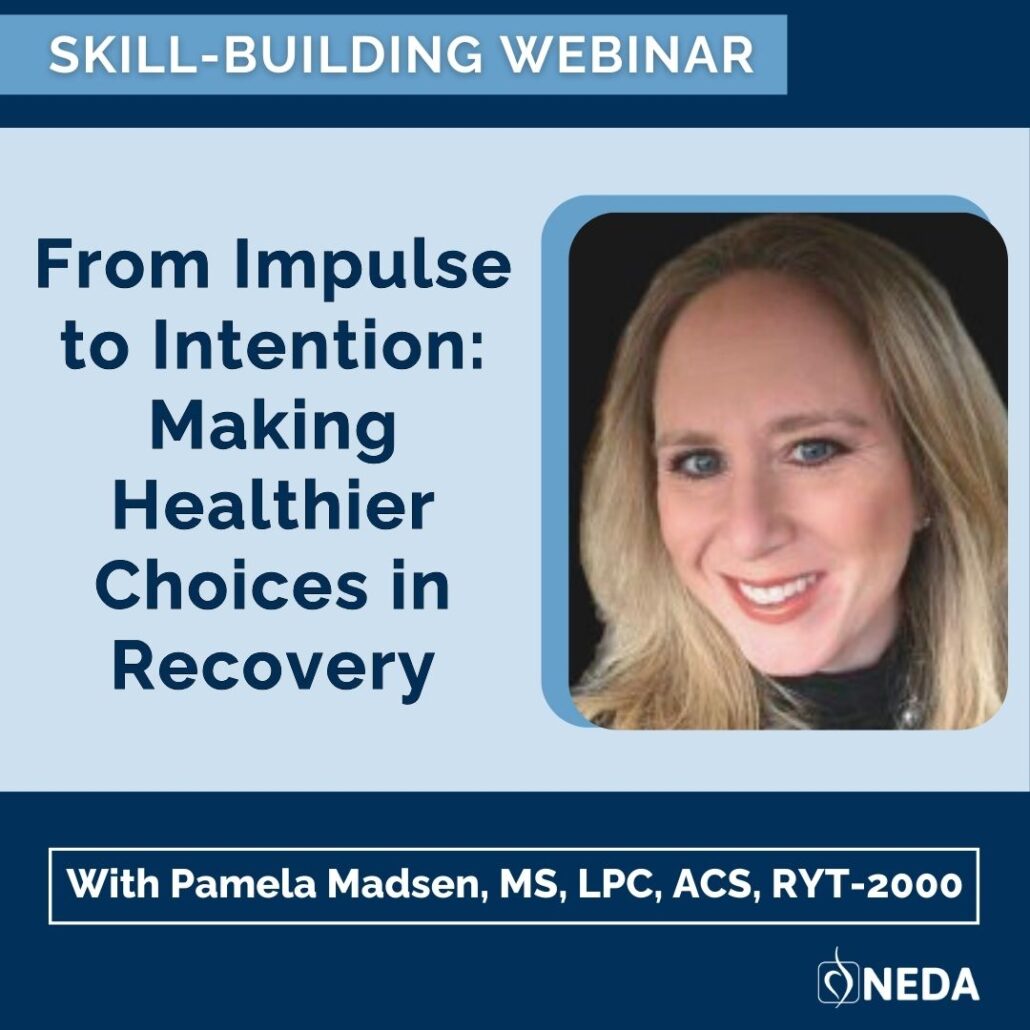
In this webinar, Pamela Madsen, MS, LPC, ACS, RYT-2000, explores the connection between eating disorders & substance use—and how to shift from impulsive reactions to intentional, healthier choices.
Participants will gain:
- Understand the link between eating disorders & substance use
- Learn how stress, emotions, and impulsivity impact decision-making
- Discover practical tools from CBT, DBT, and IFS to support recovery
- Feel empowered to create a personalized plan for making mindful, values-driven
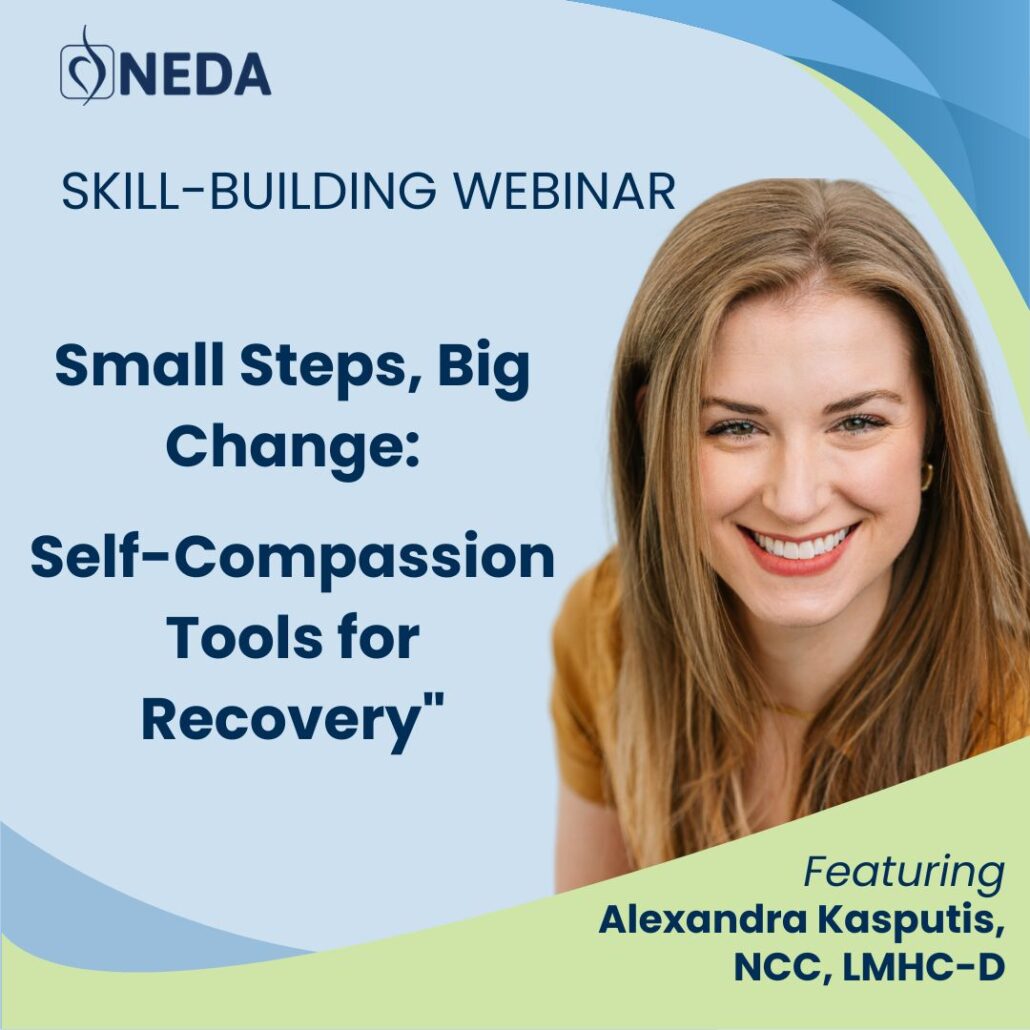
In this webinar, Alexandra (Alex) Kasputis, NCC, LMHC-D delves into the transformative power of self-compassion in eating disorder recovery. Learn practical skills to shift away from self-criticism, navigate difficult emotions, and build a kinder relationship with yourself.
Participants will gain:
- A deeper understanding of self-compassion and its three core elements
- Simple, accessible practices for daily support
- Strategies to counter self-criticism and and build a kinder relationship with your body and food
In this webinar, Alli Spotts-De Lazzer, LMFT, LPCC, CEDS-C and Jenny Mullaney, CCIEDC provide practical strategies for managing the confusion, fear, and frustration families often feel and how to support a loved one’s recovery- at any age.
Key Takeaways:
- Understand the eating disorder experience of your loved one
- Get expert answers to your most pressing questions
- Learn real-life strategies to step “off the eggshells”
In this webinar, Blair Burnette, PhD, will explore how experiencing a chronic illness or injury can profoundly change one’s body and, in turn, their perception of and relationship with it. Feelings of grief, resentment, and anger are common but difficult to navigate. What does a healthy body image look like when your body has changed dramatically? How can you appreciate your body when it feels like it has let you down or can no longer do the things you love?
This webinar will:
Name, normalize, and validate common body image experiences related to chronic illness and injury
Help attendees explore what body appreciation can mean for them in this context
Provide practical tools and strategies for building appreciation for one’s body and its functions
Previous Webinars
In this webinar, Eleanor B. McAuliffe, LPC-S, CEDS-C, will offer practical strategies for supporting a loved one with an eating disorder, even when denial makes it hard to encourage them to seek treatment. Participants will learn to use both love AND leverage to encourage treatment and promote recovery, set healthy boundaries, identify and address common objections, and de-escalate tense situations.
In this webinar, Chelsea Levy, RD and Maia Campbell, LCSW, will explore the pillars of pleasure and the skills of tuning in, noticing, and savoring what feels neutral, safe, or even pleasurable in our bodies. Learn how connecting to pleasure can support a nourishing relationship with food and body in recovery.
Participants will:
- Reflect on the pillars of pleasure most accessible to their current point in recovery
- Review the skills of tuning in, noticing, and savoring
- Engage in a supported exploration of their mind-body experience of pleasure
- Explore how to reclaim pleasure as a tool in recovery
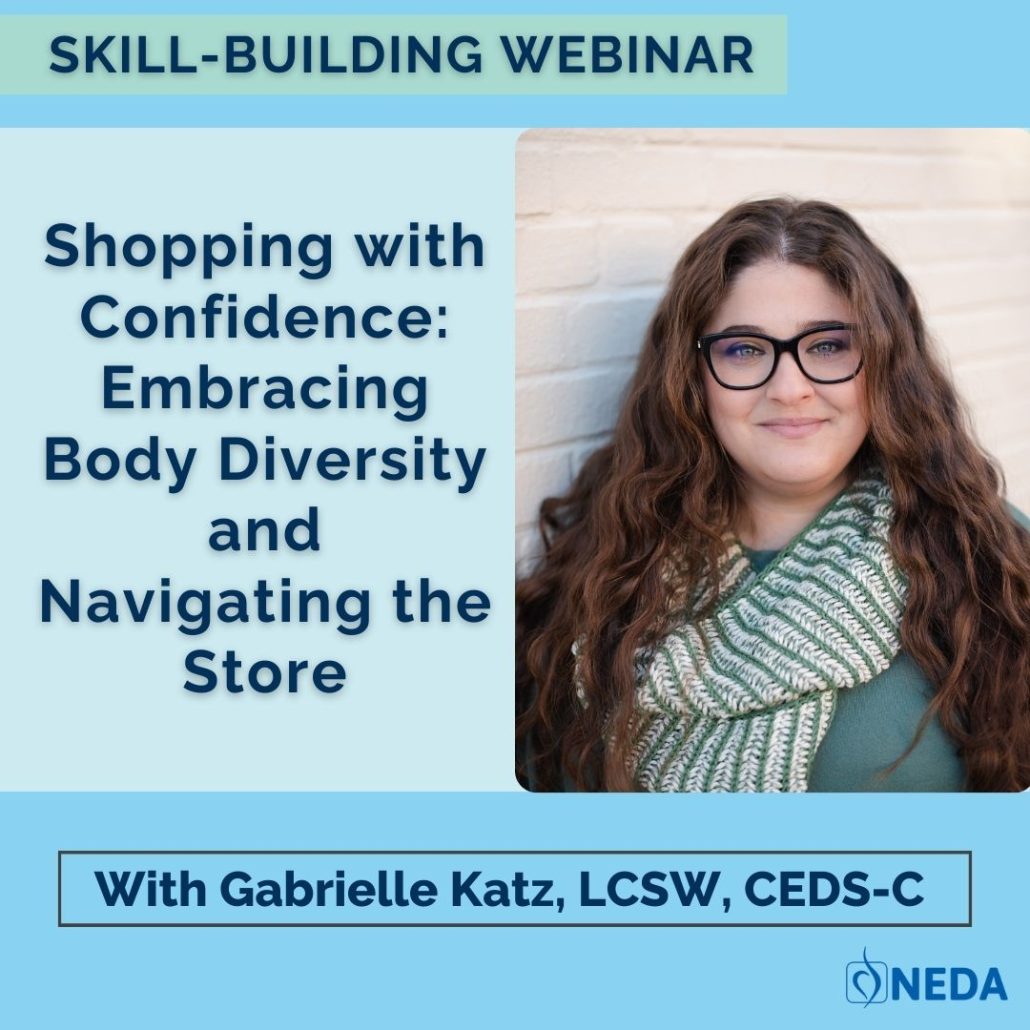
In this webinar, Gabrielle “Gabby” Katz, MSW, LCSW, CEDS-C, explores the challenges of clothes shopping, including fatphobia, limited size options, and societal pressures around the “ideal” body. Attendees will learn practical strategies to navigate these challenges, such as choosing inclusive stores and how to approach shopping with confidence. Skills will include grounding techniques, mantras, and learning to focus on comfort and fit over appearance. Participants will also learn how to shop with a supportive loved one and manage anxiety before, during, and after shopping, empowering them to embrace body diversity and make shopping a more positive experience.
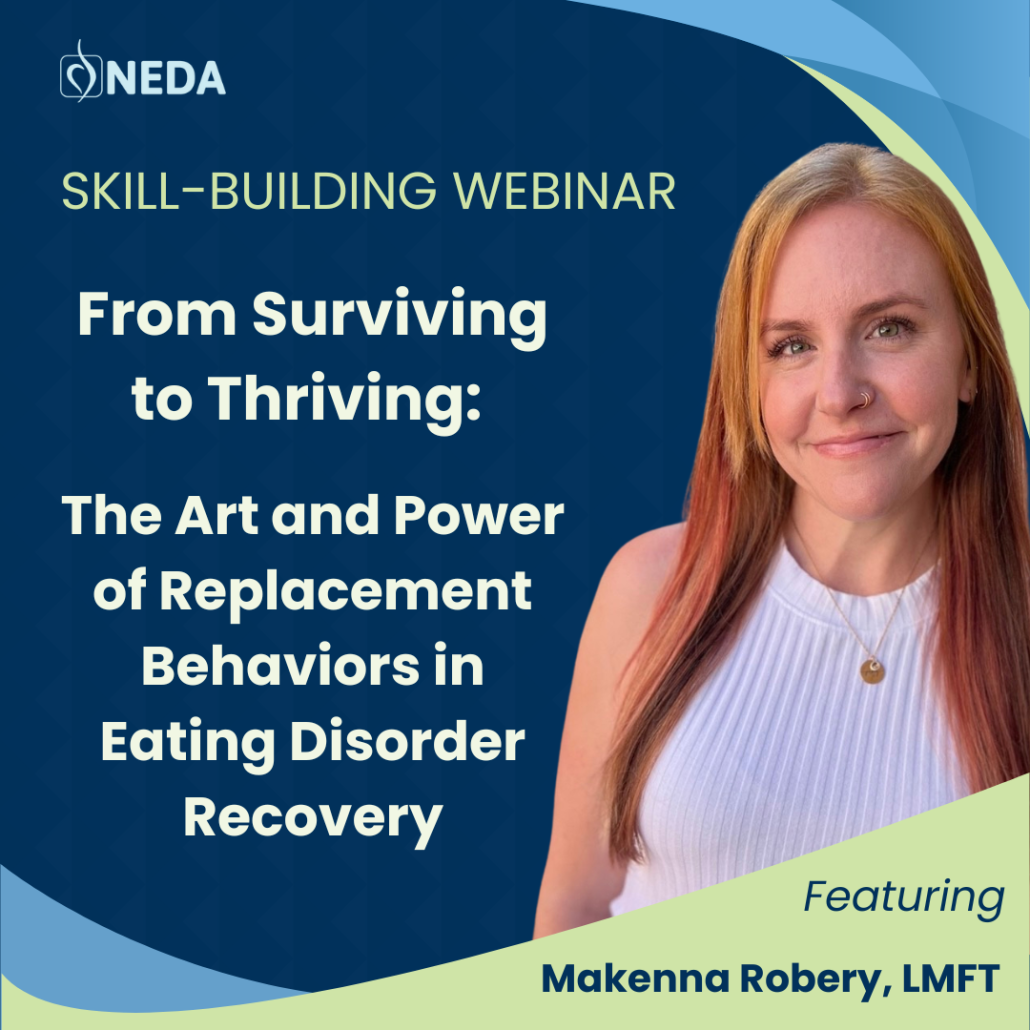
In this webinar, Makenna Robery, LMFT, eating disorder therapist, dives into how eating disorder behaviors like restriction, bingeing, and over-exercising are often maladaptive coping strategies. Learn how to replace them with positive, sustainable behaviors that align with your values and help you meet your emotional needs in healthier ways.
What you’ll gain:
- Insight into what your eating disorder behaviors are trying to fulfill.
- Practical strategies for coping in more effective, long-term ways
Whether you’re in recovery or supporting someone who is, this webinar is packed with actionable steps to strengthen your journey.
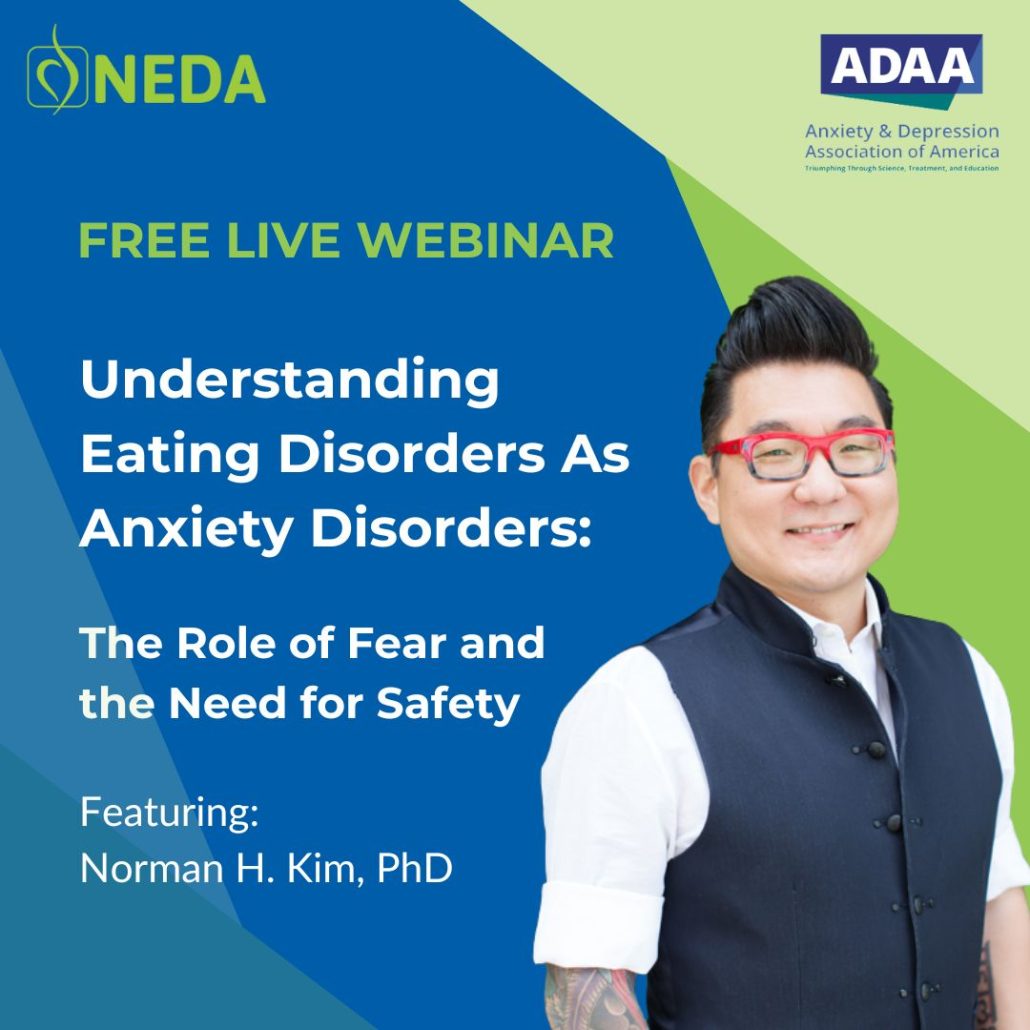
Offered in collaboration with the Anxiety & Depression Association of America (ADAA)
In this webinar, Norman H. Kim, PhD will explore the overlap between eating disorders and anxiety disorders. Dr. King will present the rationale for using exposure-based treatment approaches to help people better manage their anxiety and develop better ability to manage strong emotions.
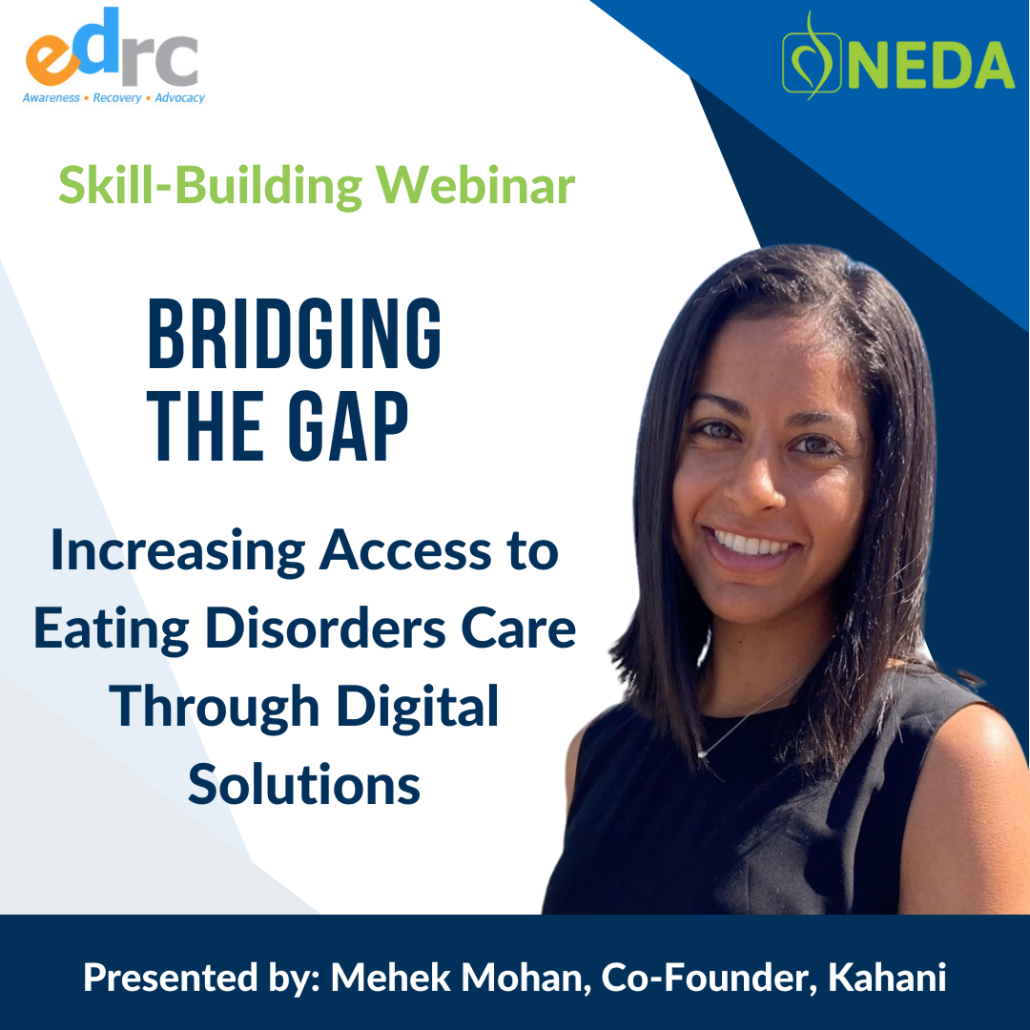
Co-hosted by NEDA, Eating Disorders Resource Center (EDRC), and Kahani
In this session Mehek Mohan, co-founder of Kahani will share how digital tools complement traditional therapy, who can benefit from these interventions, best practices for integrating technology into care, and a live demo of Kahani, an evidence-based recovery platform.
In this session, Debra Spector, MS, RDN, CDN, a registered dietitian and expert in eating disorders, will guide you through:
- What intuitive eating really looks like from a professional’s perspective.
- How to recognize when you’re ready to eat intuitively.
- Tips for rebuilding trust in your body, especially if you’ve experienced trauma or struggle with PTSD.
In this webinar, Dr. Jaime Fenton, PhD shares practical skills to manage stress in a healthier way. Discover how practicing mindfulness can help you navigate life’s stressors, from school and work pressures to daily challenges, with tools grounded in self-compassion and awareness.
In this webinar, Whitney Otto, MA, PCC and Deb Schachter, LICSW shares the fundamentals of their unique approach to body image healing. You’ll learn how to:
- Discover your personal “Inside Out” body image patterns.
- Engage in a workshop exercise to uncover how you think and feel about your body.
- Learn practical strategies to shift your relationship with your body image.
Please note: this webinar includes mentions of body dissatisfaction.
In this webinar, led by expert Bryn Miller, LPC, CEDS-S, you’ll learn practical strategies to confidently support your loved ones and gain tools to guide them through recovery. You’ll learn to:
- Complete a visual exercise to set clear goals for your Caregiver work.
- Utilize a tracking tool to clearly assess if things are working- and what to do if they aren’t.
- Try out an empowering reframe for approaching the hardest situations with your loved one.
This workshop is intended for anyone supporting a loved one struggling with an eating disorder or mental health issue.